
Social Skills Training in Miami: Helping Your Child Build Friendships
How structured, play-based support helps your child share, connect, and build real friendships with confidence.
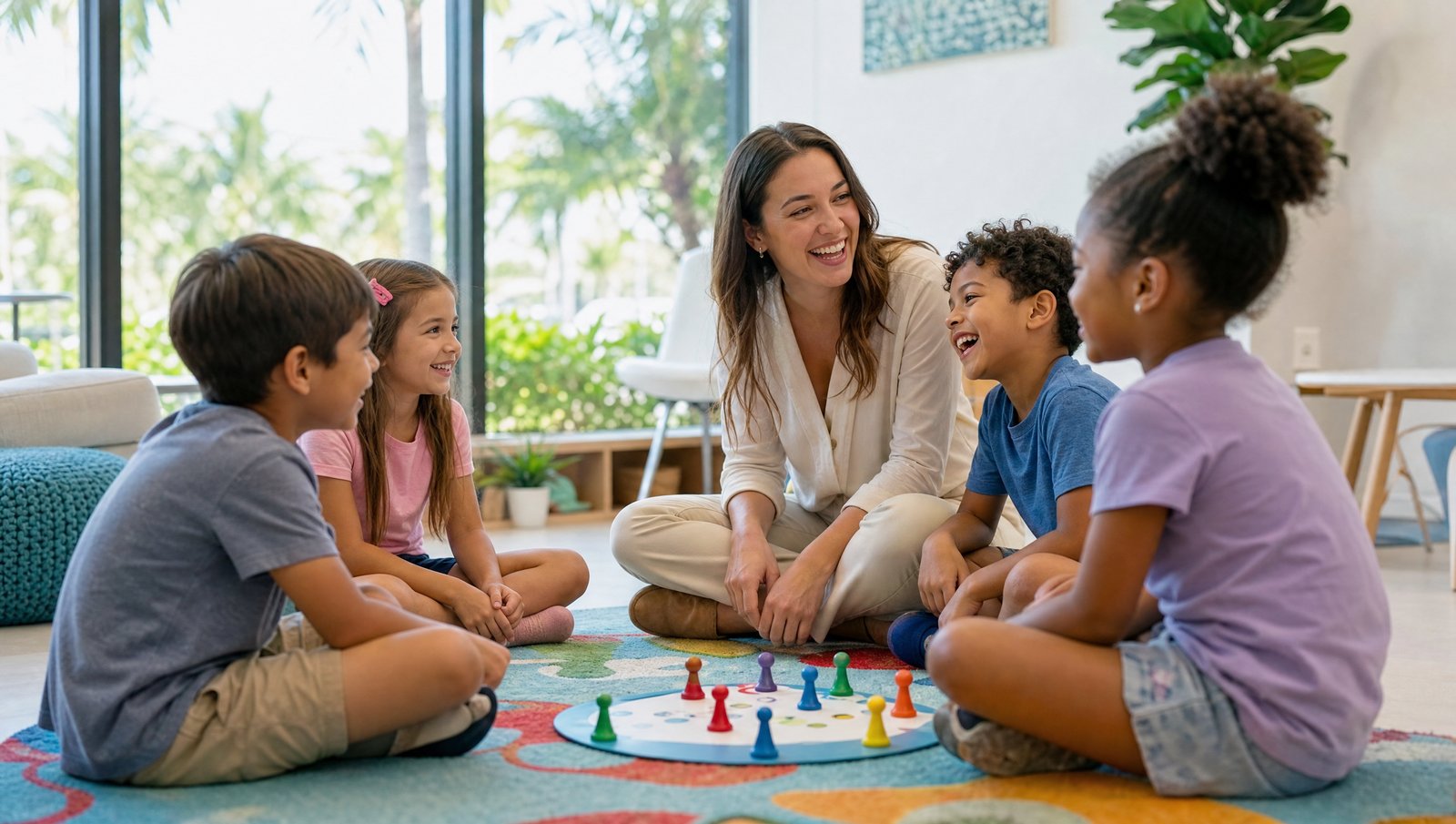
Social skills training in Miami gives children the tools to do something many of us take for granted: connect with another person, make a friend, and feel like they belong. For some children, sharing a toy, joining a game, or reading a friend’s facial expression comes naturally. For others, especially children on the autism spectrum or with ADHD, these moments can feel confusing and overwhelming. The good news is that social skills can be taught, practiced, and learned, just like reading or riding a bike, and structured social skills training is one of the most effective ways to build them.
At Mayoral Behavioral Services, we work with families across Miami-Dade, Broward, and the Tampa area who want their children to experience the joy of friendship and the confidence that comes with it. This guide explains what social skills training in Miami really involves, how to know if your child could benefit, the proven techniques behind it, and simple ways you can nurture your child’s social growth at home, this summer and all year long.
- Social skills training teaches children how to share, take turns, read emotions, and build friendships through structured, supportive practice.
- It helps many children, especially those with autism, ADHD, or social anxiety, but any child who struggles to connect can benefit.
- Sessions use proven ABA techniques like modeling, role-play, and natural play to make learning real and lasting.
- Group sessions give children a safe space to practice with peers, while individual work builds foundational skills first.
- Parents are essential partners, and simple home strategies reinforce every skill learned in session.
- Summer is an ideal time to build social skills, when the pressure of school is off and playdates and programs are plentiful.
What Social Skills Training Really Is
Social skills training is structured, supportive teaching that helps children learn how to interact successfully with others. It covers the everyday abilities that make connection possible: starting a conversation, taking turns, sharing, recognizing how someone else feels, handling disagreements, and reading the unspoken cues that guide social life. These skills are the foundation of friendship, classroom success, and confidence.
For children who find socializing difficult, the challenge is rarely a lack of desire. Most children deeply want to connect; they simply have not yet learned how. Social skills training breaks these large, abstract abilities into small, concrete, teachable steps, then gives children many chances to practice them in a safe, encouraging environment. The Centers for Disease Control and Prevention recognizes social and emotional development as a key milestone area, and targeted support can make a meaningful difference when those milestones are delayed.
At Mayoral Behavioral Services, social skills training is grounded in the science of Applied Behavior Analysis (ABA) and delivered as part of comprehensive behavioral therapy. That means every skill is taught with proven methods, practiced until it feels natural, and reinforced so it carries over into real friendships at school, at the park, and at home.
Signs Your Child May Benefit
Every child develops socially at their own pace, but certain patterns suggest that some extra support could help. Social skills training can be valuable for children with autism spectrum disorder, children with ADHD, and any child who finds connecting with peers difficult. You might consider it if your child often:
- Has trouble making or keeping friends, or prefers to play alone even when peers are available.
- Struggles to start or hold a back-and-forth conversation.
- Finds it hard to share, take turns, or wait for a turn.
- Misreads facial expressions, body language, or tone of voice.
- Becomes overwhelmed, frustrated, or withdrawn in group settings.
- Has difficulty handling disagreements or losing a game gracefully.
- Stands too close, interrupts often, or misses unwritten social rules.
Noticing these signs is not a cause for worry, and it is certainly not a judgment of your parenting. It is simply helpful information. The Autism Society emphasizes that early, structured social support helps children build lasting connections, and the earlier a child gets the right tools, the more confident they become.
How Social Skills Training Works
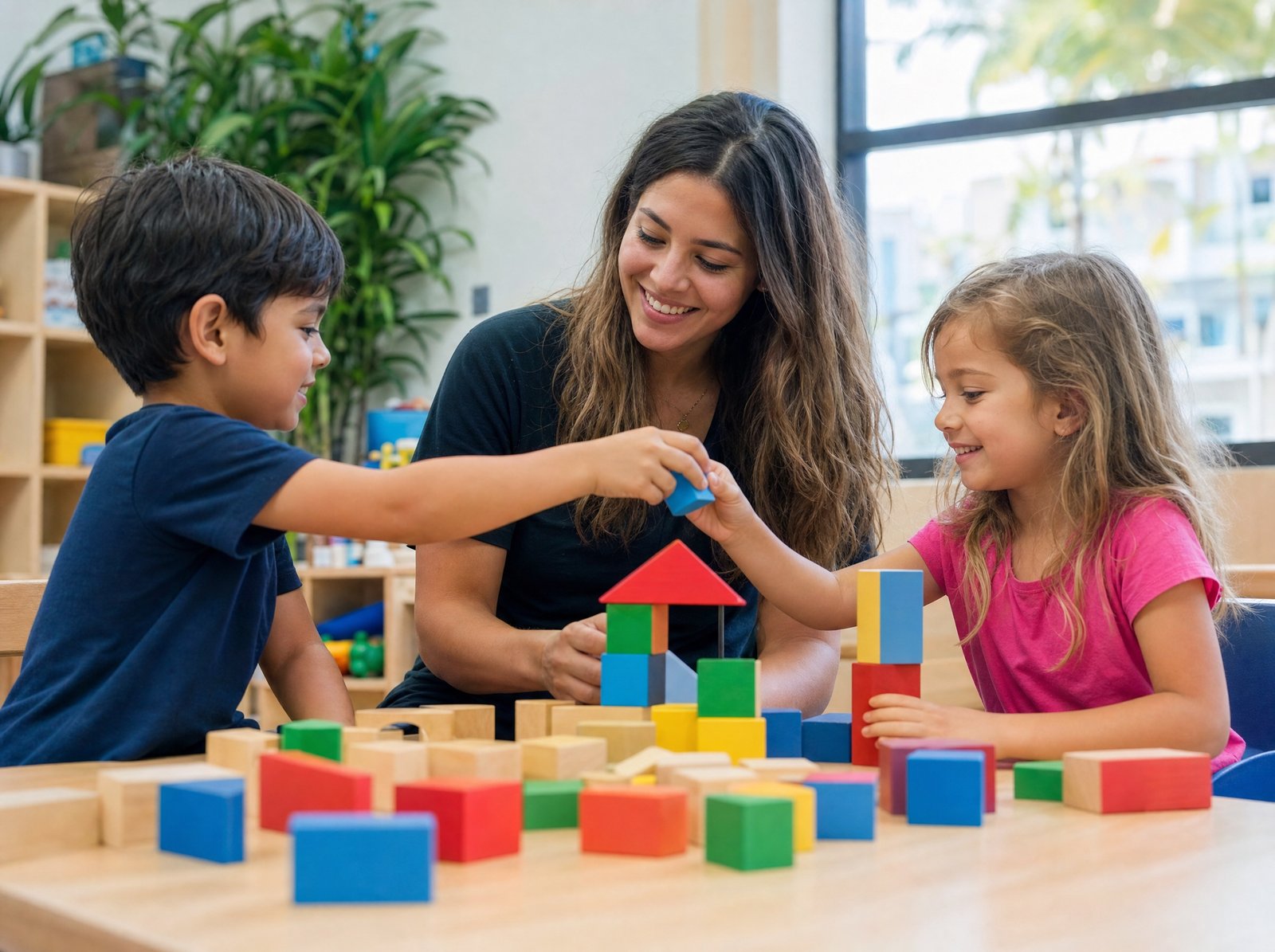
Effective social skills training is far more than telling a child to be nice or share. It uses specific, evidence-based techniques to teach skills in a way children can truly absorb. A Board Certified Behavior Analyst (BCBA), a clinician with specialized training in behavior science, designs each child’s plan and guides the process.
Modeling. Children learn powerfully by watching. Therapists and peers demonstrate a skill, such as how to ask a friend to play, so the child sees exactly what success looks like before trying it themselves.
Role-play and practice. Skills are rehearsed in a safe, low-pressure setting. A child might practice greeting a friend, joining a game, or handling a disagreement again and again until it feels comfortable and automatic.
Natural play. The best social learning often happens through play. Games and shared activities create genuine, motivating reasons to take turns, communicate, and cooperate, so skills are learned in the same way they will be used.
Positive reinforcement. When a child uses a new skill, it is followed immediately by specific praise or encouragement. This reinforcement, the engine of ABA, makes the child more likely to use the skill again.
Group and individual work. Some children begin with one-on-one sessions to build foundational skills, then move into small groups to practice with peers. Group sessions are the heart of social skills training, because they give children a safe, structured place to make real connections. Strong communication is woven throughout, and the American Speech-Language-Hearing Association highlights social communication as a vital part of healthy development.
7 Core Social Skills We Help Children Build
While every child’s plan is individualized, social skills training in Miami typically focuses on a set of foundational abilities that open the door to friendship and belonging. Here are seven we help children build.
1. Starting and Joining Interactions
Knowing how to say hello, introduce yourself, or ask to join a game is the gateway to every friendship. We help children learn confident, comfortable ways to approach others and step into play.
2. Taking Turns and Sharing
Sharing toys and waiting for a turn are cornerstone skills for cooperative play. Through games and guided practice, children learn that taking turns makes play more fun for everyone.
3. Holding a Conversation
A good conversation is a back-and-forth. We help children learn to listen, stay on topic, ask questions, and respond, so talking with a friend feels natural rather than one-sided.
4. Reading Emotions and Body Language
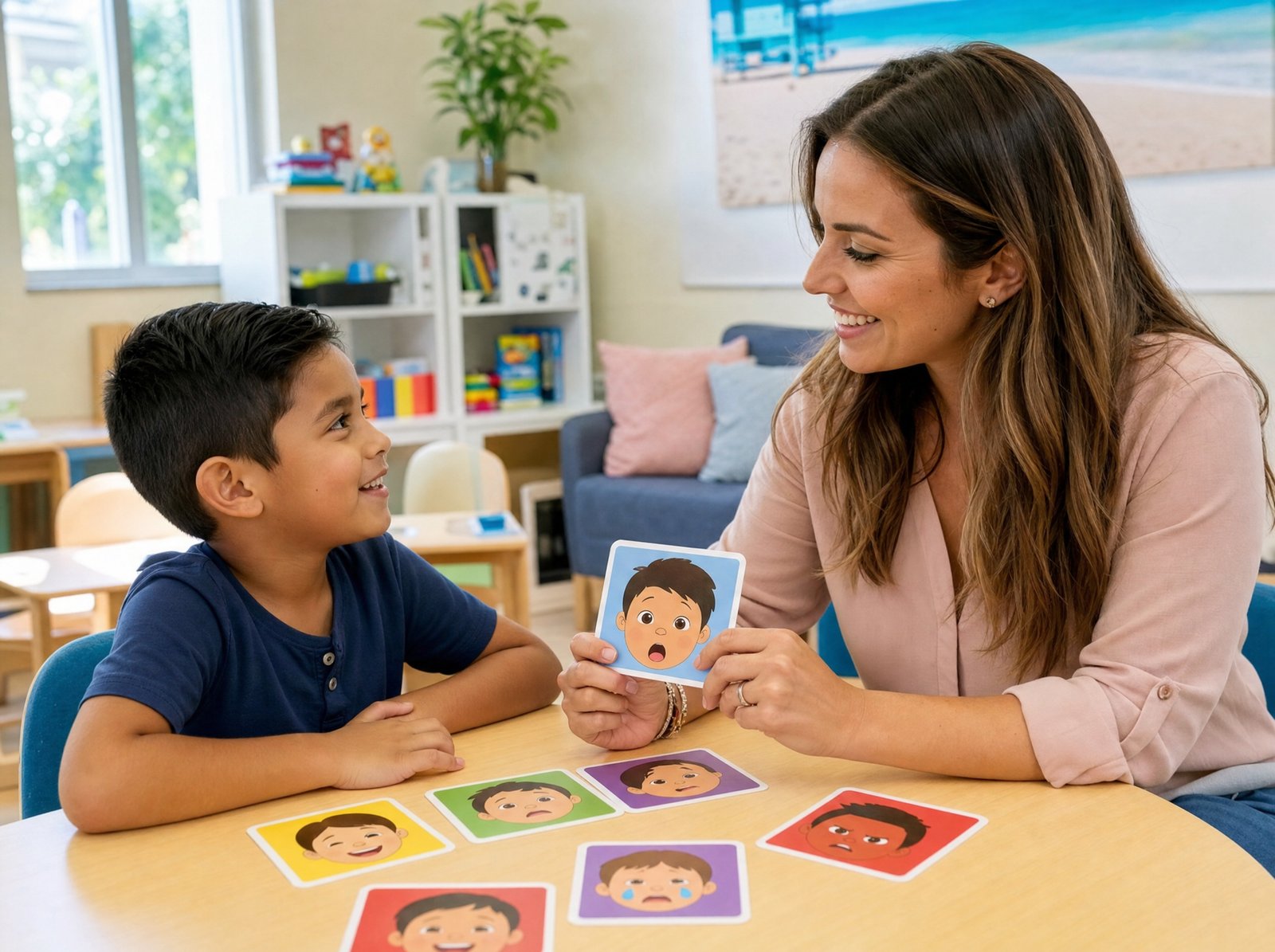
So much of communication is unspoken. We teach children to recognize facial expressions, tone of voice, and body language, helping them understand how others feel and respond with empathy.
5. Managing Big Feelings
Frustration, disappointment, and excitement can overwhelm social moments. Children learn to recognize their feelings and use calming strategies, so a lost game or a change of plans does not derail a friendship.
6. Cooperating and Solving Problems
Friendships require teamwork and the occasional compromise. We help children learn to work toward shared goals, handle disagreements respectfully, and find solutions that work for everyone.
7. Building and Keeping Friendships
Finally, all these skills come together. Children learn how to be a good friend over time, through kindness, reliability, and shared fun, turning single interactions into lasting relationships.
Social Skills Training at Mayoral Behavioral Services
At Mayoral Behavioral Services, social skills training is warm, individualized, and built around your child’s real goals. We know that every child is different, so we never use a one-size-fits-all program. Families across Miami-Dade, Broward, and Tampa can expect a thoughtful, supportive process.
It begins with understanding your child. Your BCBA takes time to learn your child’s strengths, challenges, interests, and the social goals that matter most to your family. From there, we create an individualized plan that targets the specific skills your child is ready to build.
Next, we match the right format to your child. Some children thrive starting in one-on-one sessions that build confidence with foundational skills, while others are ready for the energy and connection of a small peer group. Many children benefit from a blend of both, moving from individual practice into group play as their skills grow.
Throughout, we keep families closely involved through parent training and support, so the skills your child practices in session are reinforced everywhere they go. Whether your family is just beginning to explore ABA therapy in Miami or looking to add a social focus to an existing program, we are here to help your child connect with confidence.
How Parents Can Nurture Social Skills at Home
Therapy is powerful, but parents are a child’s most important social teachers. The summer months, with their slower pace and natural play opportunities, are a wonderful time to reinforce social skills. Here are simple ways to help at home.
Arrange structured playdates. Short, well-planned playdates with one friend are easier to navigate than large groups. Choose a fun shared activity, keep it brief at first, and gently coach as needed. Success builds confidence for next time.
Play games together as a family. Board games and cooperative games are social skills practice in disguise, teaching turn-taking, winning and losing gracefully, and following rules, all in a safe, loving setting.
Narrate emotions. Talk about feelings throughout the day, both your child’s and others’. Point out how a character in a book or show might feel and why. This builds the emotional awareness at the heart of connection.
Practice and praise. Rehearse tricky moments ahead of time, like joining a game at the park, and offer specific praise when your child uses a social skill. The American Academy of Pediatrics encourages supportive, play-based interaction as a foundation for healthy social-emotional growth.
Look for summer programs. Inclusive camps, classes, and community programs offer natural, low-pressure chances to practice. Even brief, positive peer experiences help your child carry their new skills into the world.
Mayoral Behavioral Services offers individualized social skills training across Miami-Dade, Broward, and Tampa, with group and one-on-one options designed around your child. Let’s help your child connect, belong, and thrive.
Frequently Asked Questions
What is social skills training?
Social skills training is structured teaching that helps children learn how to interact successfully with others, including sharing, taking turns, holding conversations, reading emotions, and building friendships. It breaks these abilities into small, teachable steps and gives children supportive practice until the skills feel natural.
Which children benefit from social skills training?
Children with autism, ADHD, or social anxiety often benefit, but so does any child who finds it hard to make friends, join group play, or read social cues. If your child wants to connect but struggles with how, social skills training can give them the tools and confidence to succeed.
Is social skills training done in groups or one-on-one?
Both. Many children begin with individual sessions to build foundational skills, then move into small peer groups to practice with other children. Groups are especially valuable because they give children a safe, structured place to form real connections. Your BCBA recommends the right mix for your child.
How long does it take to see progress?
Every child is different, and progress depends on your child’s goals and starting point. Some families notice small wins within a few weeks, while deeper skills like friendship-building develop over time. Consistency and home reinforcement help skills grow faster and last longer.
Can social skills be taught, or are they just something kids are born with?
Social skills can absolutely be taught. Just like reading or math, they are learned abilities that improve with instruction and practice. Some children pick them up naturally, while others need direct, supportive teaching, and that is exactly what social skills training provides.
Is social skills training covered by insurance in Florida?
In many cases, yes. When delivered as part of ABA therapy for a child with a qualifying diagnosis, social skills training is commonly covered by private insurance and Florida Medicaid. Coverage varies by plan, so our team is happy to help you verify your benefits before you begin.