In-Home ABA Therapy Miami: 7 Smart Factors
May 20, 2026

In-home ABA therapy in Miami and center-based ABA programs are the two main paths most families weigh after a child begins Applied Behavior Analysis (ABA) therapy. Both settings are effective. Both are built on the same well-established science. But they offer very different day-to-day experiences, and the right choice depends entirely on your child, your goals, and your family's real life.
This guide compares in-home and center-based ABA side by side, then walks through seven smart factors to help you decide with confidence. There is no universally better option, only the option that is better for your child right now. And as you will see, that choice is not always permanent. Many Miami families move between settings, or thoughtfully blend them, as their child grows and their needs change.
- In-home ABA therapy delivers care in your child's natural environment, which is ideal for daily-living skills and family routines.
- Center-based ABA offers a structured, distraction-controlled space with built-in peer interaction.
- The best setting depends on your child's age, goals, social needs, sensory profile, and your family's schedule.
- Generalization, meaning the use of skills across places and people, should guide the decision more than convenience alone.
- A hybrid model that combines both settings is often the most powerful option of all.
- Insurance, including Florida Medicaid, frequently covers ABA in both settings when clinical criteria are met.
What In-Home ABA Therapy in Miami Looks Like
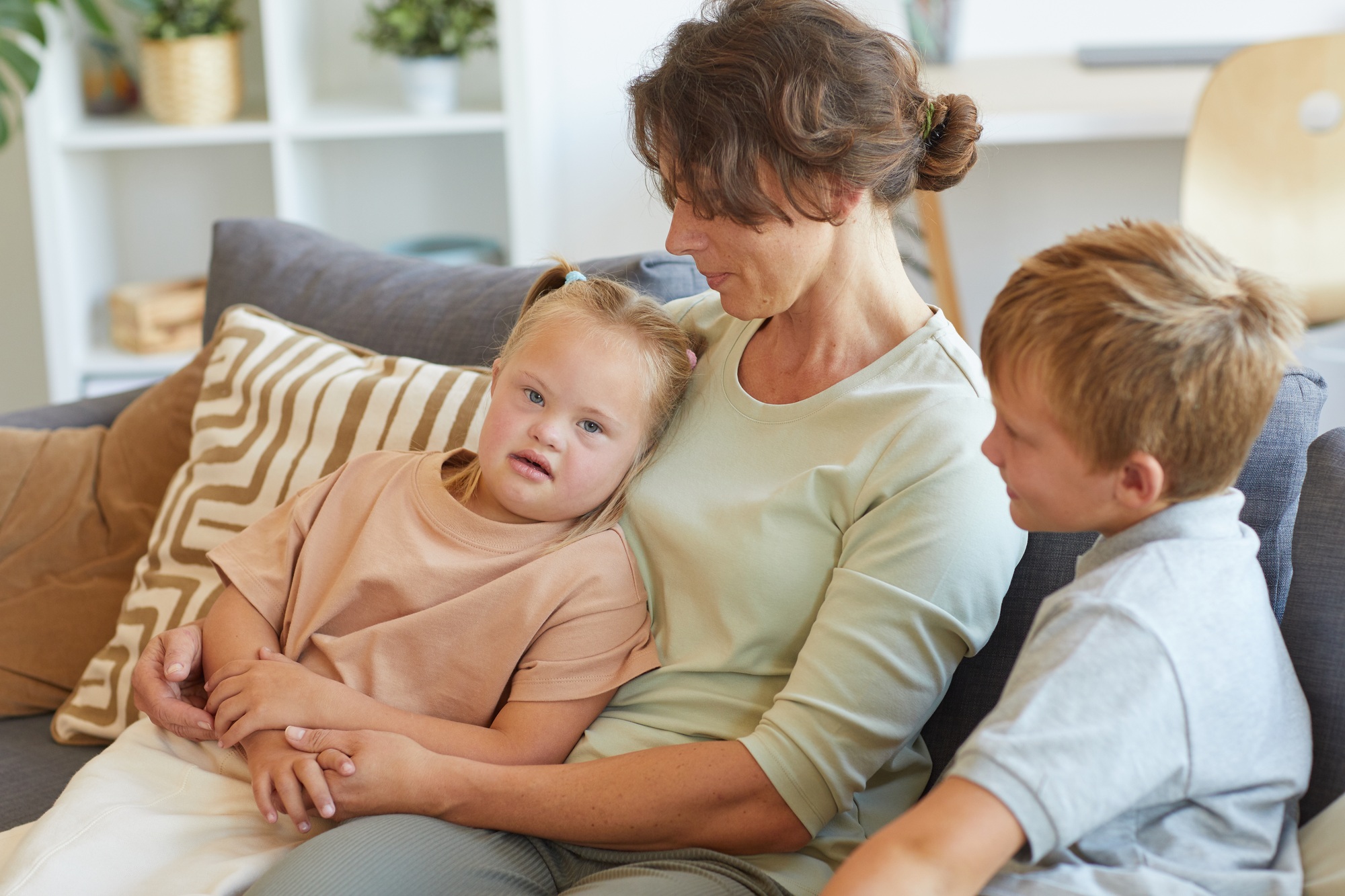
In-home ABA therapy in Miami brings a trained therapist directly to your house, where your child learns and practices skills in the environment they know best. Sessions are overseen by a Board Certified Behavior Analyst (BCBA), a clinician with advanced training in behavior science, and carried out by a behavior technician who works one-on-one with your child.
The defining strength of the in-home setting is realism. Skills are taught exactly where they need to be used. If the goal is independent tooth-brushing, the therapist works in your actual bathroom. If mealtime behavior is a priority, practice happens at your real kitchen table. This makes generalization, the act of carrying a skill into daily life, almost automatic.
In-home therapy also draws the whole family in. Parents and siblings can observe and participate, which strengthens the parent training and support that makes progress last. There is no commute, which helps families with younger children, demanding work schedules, or limited transportation. For children who feel anxious in unfamiliar places, the comfort of home can also lower stress and open the door to learning.
There are trade-offs to weigh honestly. The home contains everyday distractions, including toys, screens, pets, and siblings, that require structure to manage. Opportunities to practice with same-age peers are limited. And families need to be comfortable welcoming a therapist into their space on a regular basis. For many families across Miami-Dade and Broward, those trade-offs are well worth the benefits.
What Center-Based ABA Therapy Offers
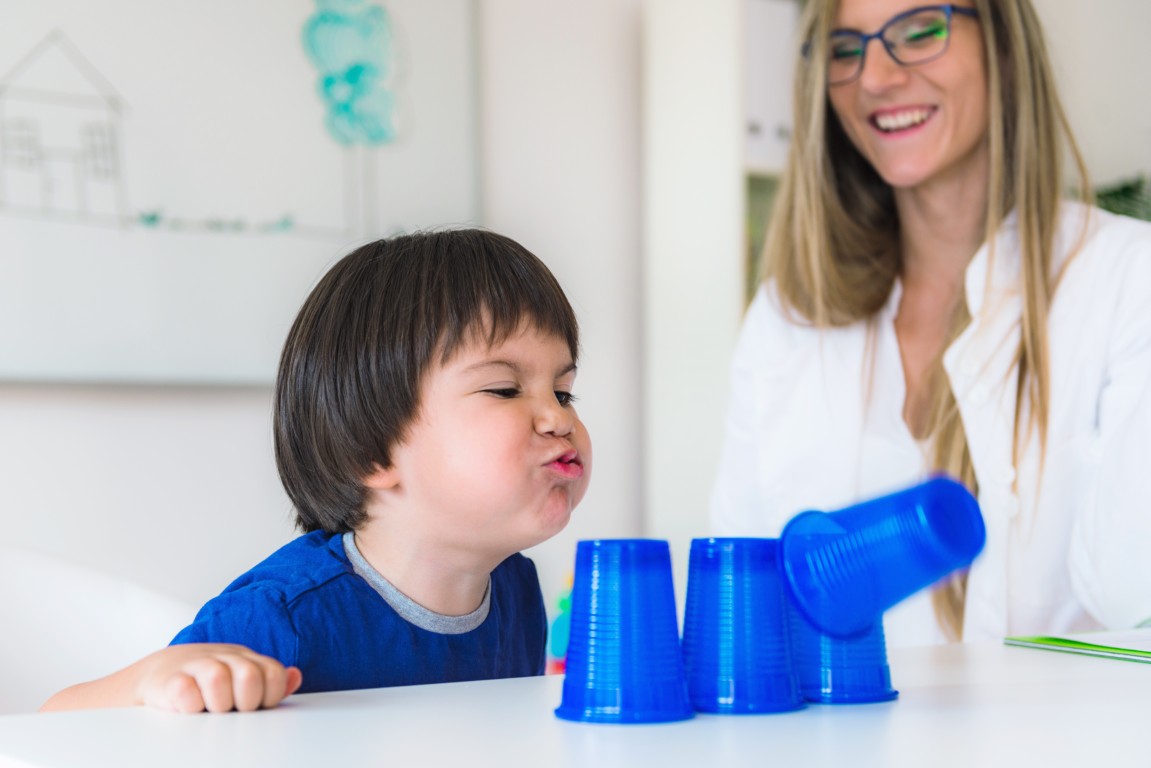
Center-based ABA therapy takes place in a clinic designed specifically for learning. Every detail of the environment, from the materials to the spaces to the daily schedule, is built to support therapeutic goals.
The defining strength of the center is structure. A dedicated clinic minimizes distractions and helps many children focus, settle into predictable routines, and move efficiently through their learning targets. Therapy materials are always on hand, and the environment stays consistent from day to day.
The other major advantage is peers. A center naturally brings children together, creating real, supervised opportunities to practice social skills such as sharing, turn-taking, conversation, and cooperative play. For children working on social goals, this built-in peer access is difficult to replicate at home. Center-based programs can also more closely mirror the structure of a classroom, which supports children preparing for school.
Centers offer staffing advantages as well. BCBAs are often on-site throughout the day, collaboration among therapists is immediate, and care continues smoothly even if one technician is unavailable. The trade-offs mirror those of in-home care. Skills learned in a clinic still need deliberate effort to generalize to home and community. Families take on a commute, which adds time to the day. And some children, particularly very young ones or those who struggle with new environments, may need time to adjust. Understanding both sides honestly is the foundation for a smart decision.
7 Smart Factors to Compare In-Home and Center-Based ABA
With both settings clearly in view, here are seven smart factors to weigh as you choose between in-home and center-based ABA therapy for your child.
1. Your Child's Age and Developmental Stage
Age matters more than many parents expect. Very young children, including toddlers and preschoolers, often do well with in-home therapy, where they feel secure and parents can stay closely involved during these formative years. Older children who are preparing for or already attending school may benefit from the classroom-like structure of a center. The American Academy of Pediatrics emphasizes early, developmentally appropriate intervention, and the right setting should fit your child's current developmental stage.
2. Skill Goals and Generalization
Match the setting to the skill. If your priorities are daily-living skills such as dressing, hygiene, mealtime, and family routines, the home environment has a clear, natural advantage. If your goals center on structured academic readiness or working productively within a group, a center may serve those targets better. Research shared by the Organization for Autism Research highlights generalization, meaning the use of a skill where it is truly needed, as a central measure of meaningful progress, so always ask where a skill ultimately has to work.
3. Social Opportunities With Peers
If building friendships and peer interaction is a central goal, center-based therapy offers something the home cannot easily provide: consistent, daily access to other children. In-home programs can still address social development, often by coaching parents and arranging structured playdates, but a center makes peer practice a built-in part of every session.
4. Family Schedule and Logistics
Be honest about your family's reality. A daily commute to a center can be demanding for working parents, families with several children, or those with limited transportation. In-home therapy removes the drive entirely. On the other hand, some families find that leaving the house creates a helpful separation between therapy time and home time. Neither preference is wrong, and naming yours leads to a better decision.
5. Your Child's Comfort and Sensory Needs
Every child experiences environments differently. Some children are calmer and more available to learn at home, surrounded by the familiar. Others focus better in the controlled, predictable setting of a clinic, away from household distractions. Consider your child's sensory profile and how they typically respond to new places. Your child's autism spectrum disorder support team can help you read these cues and choose accordingly.
6. Insurance and Florida Coverage
Both in-home and center-based ABA are commonly covered by private insurance and Florida Medicaid when a child meets clinical criteria. The details, including authorized hours, location rules, and provider networks, vary by plan. Review your benefits early so the setting you choose is fully supported. Our guide to Florida Medicaid ABA therapy coverage and resources from the Florida Department of Health can help you understand what to expect.
7. Transition Readiness and Long-Term Goals
Think beyond the next few months. If your child will soon enter a school setting, time in a structured center can ease that transition by building familiar routines and group skills. If the immediate priority is stabilizing home routines and coaching the family, the in-home model leads naturally. The best choice supports not only today's goals but the path that lies ahead.
Can You Combine In-Home ABA Therapy in Miami With Center-Based Care?
For many families, the smartest answer is not in-home or center-based. It is both. A hybrid model blends in-home ABA therapy in Miami with center-based sessions so a child gains the distinct benefits of each setting.
A hybrid schedule might look like center-based mornings, where structure and peers support focused learning, followed by in-home sessions that carry those skills directly into family routines. Or a child might attend a center most days while keeping a weekly home visit dedicated to parent coaching and daily-living goals.
The hybrid approach directly solves the generalization challenge. Skills introduced in the clinic are reinforced in the place they truly matter, which is your home, while the social and structural advantages of the center remain fully in play. Research summarized by organizations such as the Centers for Disease Control and Prevention underscores that consistent, coordinated intervention across settings supports the strongest outcomes.
A hybrid model is not right for every family, and it depends on your child's needs, your schedule, and your authorized therapy hours. But it is always worth discussing. The setting question is rarely permanent. As your child grows, the balance of in-home ABA therapy in Miami and center-based care can shift right along with them.
How Mayoral Behavioral Services Helps You Choose
You do not have to make this decision alone. At Mayoral Behavioral Services, choosing a setting begins with a thorough assessment of your child and a genuine conversation about your family's goals, routines, and concerns.
Our team provides ABA therapy in Miami across in-home, center-based, and telehealth settings, serving families throughout Miami-Dade, Broward, and the Tampa area, including families in Kendall. Because we offer every option, our recommendation is guided by one thing only: what will help your child make the most meaningful progress.
We also recognize that the right answer can change over time. A child who starts with in-home therapy as a toddler may transition toward center-based care as school approaches. A child who needs the structure of a clinic at first may later thrive with more time at home. We review progress data regularly and adjust the plan together with you.
Whatever setting you choose, behavioral therapy at Mayoral Behavioral Services is grounded in compassion, individualized planning, and close partnership with parents. Resources from the Autism Society and the National Institute of Mental Health reinforce what we see every day: the best outcomes come from individualized, family-centered care, not from a one-size-fits-all setting.
Mayoral Behavioral Services offers in-home, center-based, and hybrid ABA therapy across Miami-Dade, Broward, and Tampa. Let us find the right fit together.
Schedule Your ConsultationFrequently Asked Questions
Is in-home or center-based ABA therapy more effective?
Neither setting is universally more effective, because both rely on the same evidence-based principles. Effectiveness depends on the match between the setting and your child's age, goals, and needs. A child focused on daily-living skills may progress fastest at home, while a child with social goals may benefit more from a center.
How many hours of ABA therapy does my child need?
Recommended hours are based on a clinical assessment and your child's individual goals, and they can range widely. Your BCBA will recommend a number supported by your child's needs and authorized by your insurance plan. Both in-home and center-based programs can deliver focused or comprehensive levels of care.
Does insurance cover in-home ABA therapy in Miami?
In many cases, yes. In-home ABA therapy in Miami is commonly covered by private insurance and Florida Medicaid when a child has a qualifying diagnosis and meets medical-necessity criteria. Coverage rules differ by plan, so it is wise to verify your benefits early. Our team can help you navigate the process.
Can my child switch from in-home to center-based ABA?
Absolutely. The setting is not a permanent decision. Many children transition between settings as they grow, for example moving from in-home therapy as a toddler to center-based care before school. Progress data guides these transitions, and the plan is reviewed with you regularly.
What ages benefit most from center-based ABA?
Center-based ABA often suits older toddlers, preschoolers, and school-age children who are ready for more structure and peer interaction, especially those preparing for a classroom. That said, age is only one factor, and your child's temperament, goals, and sensory needs all matter in the decision.
Is in-home ABA therapy available throughout Miami-Dade and Broward?
Yes. Mayoral Behavioral Services provides in-home ABA therapy across Miami-Dade and Broward, as well as the Tampa area. If you are unsure whether your neighborhood is covered, contact our team and we will be glad to confirm and explain your options.




Contact Us
Is your child ready to thrive? Mayoral Behavioral Services is here to support your family at every stage. Reach out today to schedule a consultation at our Miami or Tampa locations and take the first step toward positive change.